Photo Credit
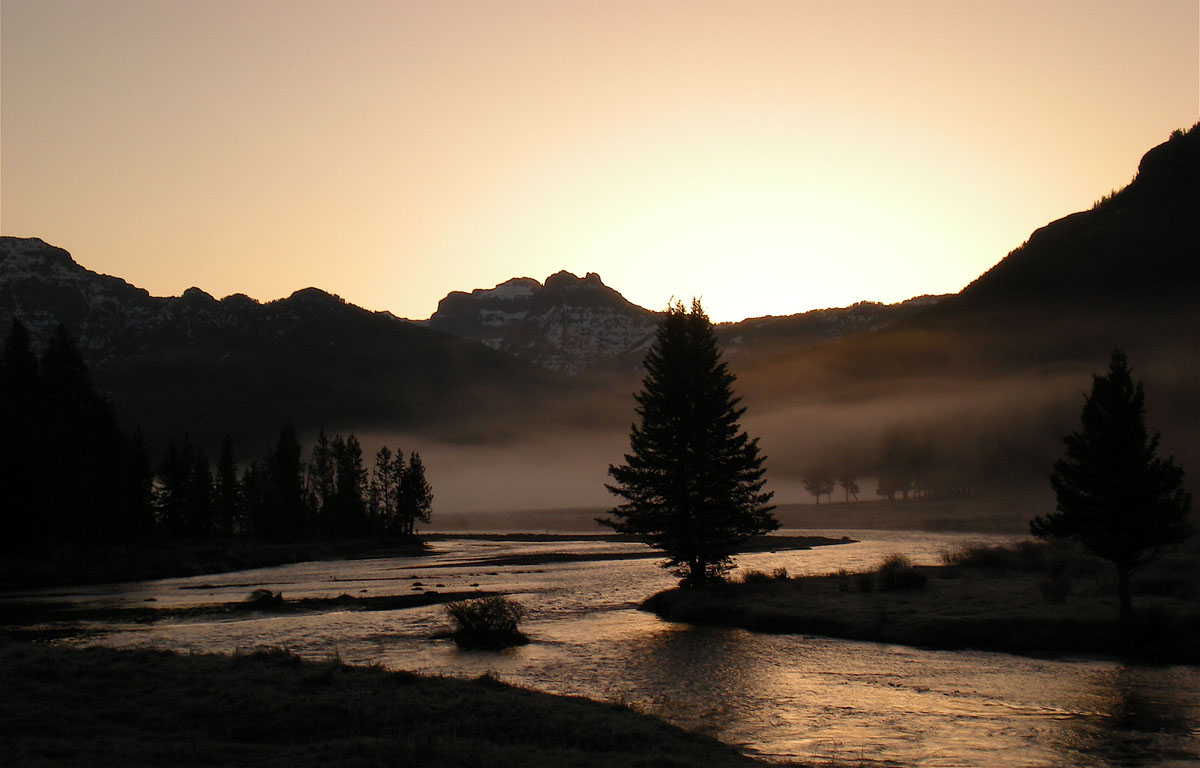
Yellowstone captured with a point-and-shoot
Credit: David Wilkinson/Switchback Travel
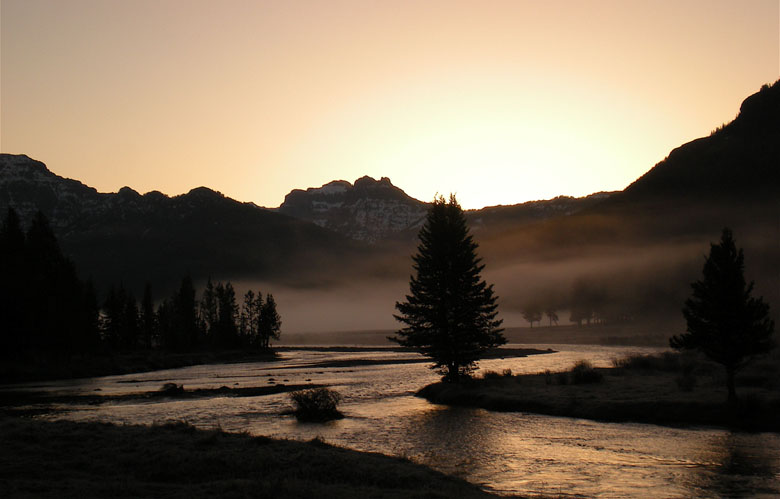
Yellowstone captured with a point-and-shoot
Credit: David Wilkinson/Switchback Travel
Buying a camera for landscape photography can be overwhelming, but the process should be fun and not just a leap of faith. First, choose among the three main tiers of cameras: point-and-shoots, mirrorless cameras, and digital SLRs. Then do some research based on your price range and specifications. The good news is that you can find reasonably priced cameras in all categories that capture quality images, and many are light enough that they won’t be much of a burden to carry. Below is what you need to know, and all of the information is current for 2020.
Point-and-shoot cameras are about the size of a notecard with an attached zoom lens and mostly automatic features (hence the name). Don’t be fooled: technology keeps advancing and these cameras capture good images, are easy to use, and lightweight. In terms of cost, they run the gamut from inexpensive cameras that barely outperform your smartphone to high-end models built for professionals with large sensors and impressive lenses.
Point-and-shoots have experienced a resolution explosion in recent years, along with the rise of superzooms (some have a zoom range of 50x or more). The reality is that the small sensors and lenses on most point-and-shoots can't capture as much light or sharpness as bigger cameras. If you want large, professional-grade prints, consider a mirrorless camera or digital SLR below. Otherwise, point-and-shoots have their advantages. When making prints, an average point-and-shoot should produce a 12” x 18” print without a significant drop-off in quality. For larger prints, consider a point-and-shoot like the Ricoh GR III that has an APS-C image sensor, which is the same size as many DSLRs.
Pros: Lightweight, easy to use, and relatively cheap.
Cons: Mostly automated, struggle with large prints.
Things to Remember: Don’t be overwhelmed by features—focus on fundamentals like sensor size, megapixels, zoom, battery life, cost, and brand reputation.
Price Range: $100 to $1,000+
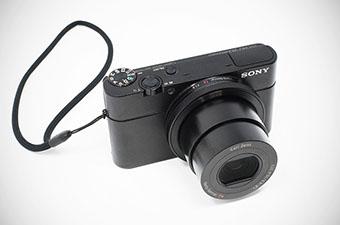
Top High-End Point-and-Shoots: The high-end Sony RX100 VII is a feature-packed point-and-shoot that pretty much does it all. We also like the Panasonic Lumix LX10, which has a faster lens and is cheaper. The Ricoh GR III in an interesting option with its extra large APS-C image sensor (the same as most DSLRs), but that camera has a fixed 28mm lens with no zoom. It's the ideal compact camera for street photography but a little narrow for landscapes.
Top Mid-Range Point-and-Shoots: We still like the old Sony RX100 here, which is a fraction of the the price of the RX100 VII above. Keep in the mind that the zoom range is 28-100mm instead of 24-200mm, which is 4mm narrower and therefore less optimal for landscapes.
Top Budget Point-and-Shoot: The Canon PowerShot SX740 HS has a huge zoom range at 24-960mm, is easy to use, and relatively inexpensive. The biggest downside is the small sensor, but that's an issue with just about every point-and-shoot in this price range.
More: See our page on the Best Point-and-Shoot Cameras of 2020
Mirrorless interchangeable-lens cameras are the new kid on the block but they've made a big splash among serious photographers. Built entirely for digital, this modern breed of compact camera foregoes the internal mirror system of a DSLR; instead, light passes through the lens directly to the image sensor like a point-and-shoot. This build allows for a large image sensor in a relatively small camera body.
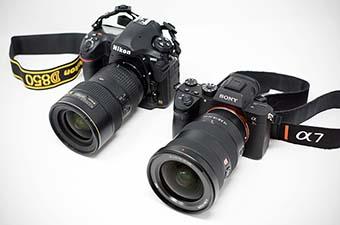
For landscape photographers, mirrorless cameras are a very intriguing option. Sony has lead the pack with its full-frame a7 series for years, but there are a number of great other options from brands like Fujifilm and Panasonic. It’s worth noting that good wide-angle lenses for mirrorless cameras can be pricey, and a full set-up easily can end up costing more than a comparable DSLR. However, we love the lack of bulk and many professional landscape photographers are making the switch.
Pros: Compact, easy to use, great image quality.
Cons: Lenses can be expensive, and weight savings are noticeable but not groundbreaking.
Things to Remember: Sony, Olympus, and Panasonic largely have dominated this sector and offer the most extensive collection of lenses, but traditional powerhouses Nikon and Canon recently made the jump to mirrorless.
Price Range: From around $400 for an entry-level model to $3,000 and up for the full-frame Sony a7R IV.
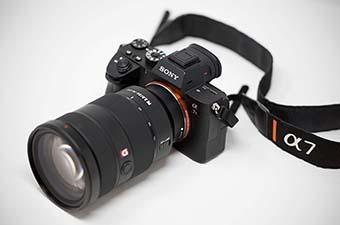
Top High-End Mirrorless Cameras: It's not even much of a conversation: the full-frame Sony Alpha a7R IV is the best mirrorless camera on the planet for landscape photographers.
Top Mid-Range Mirrorless Cameras: Sony keeps coming strong with the Alpha a6500, which includes weather sealing, 4K video, built-in image stabilization, and some of the fastest autofocus in the business. We also like the Fujifilm X-T3, which is an excellent all-around mirrorless camera with ample quality lens choices for landscapes and other uses.
Top Budget Mirrorless Cameras: The old Sony Alpha a6000 currently is a steal with the releases of the a6500 and a6600. With a kit lens it costs less than many high-end point-and-shoots yet will produce far better images.
More: See our page on the Best Mirrorless Cameras of 2020
Digital SLRs—bigger camera bodies with interchangeable lenses—take professional grade images and foster the greatest photographic expression. Cameras of this type have considerably larger sensors than do point-and-shoots and capture fantastic detail and color. They also operate with less automation, allowing for adjustments in shutter speed, ISO, and aperture, among others (some point-and-shoots offer variations of these adjustments but it's not the same).
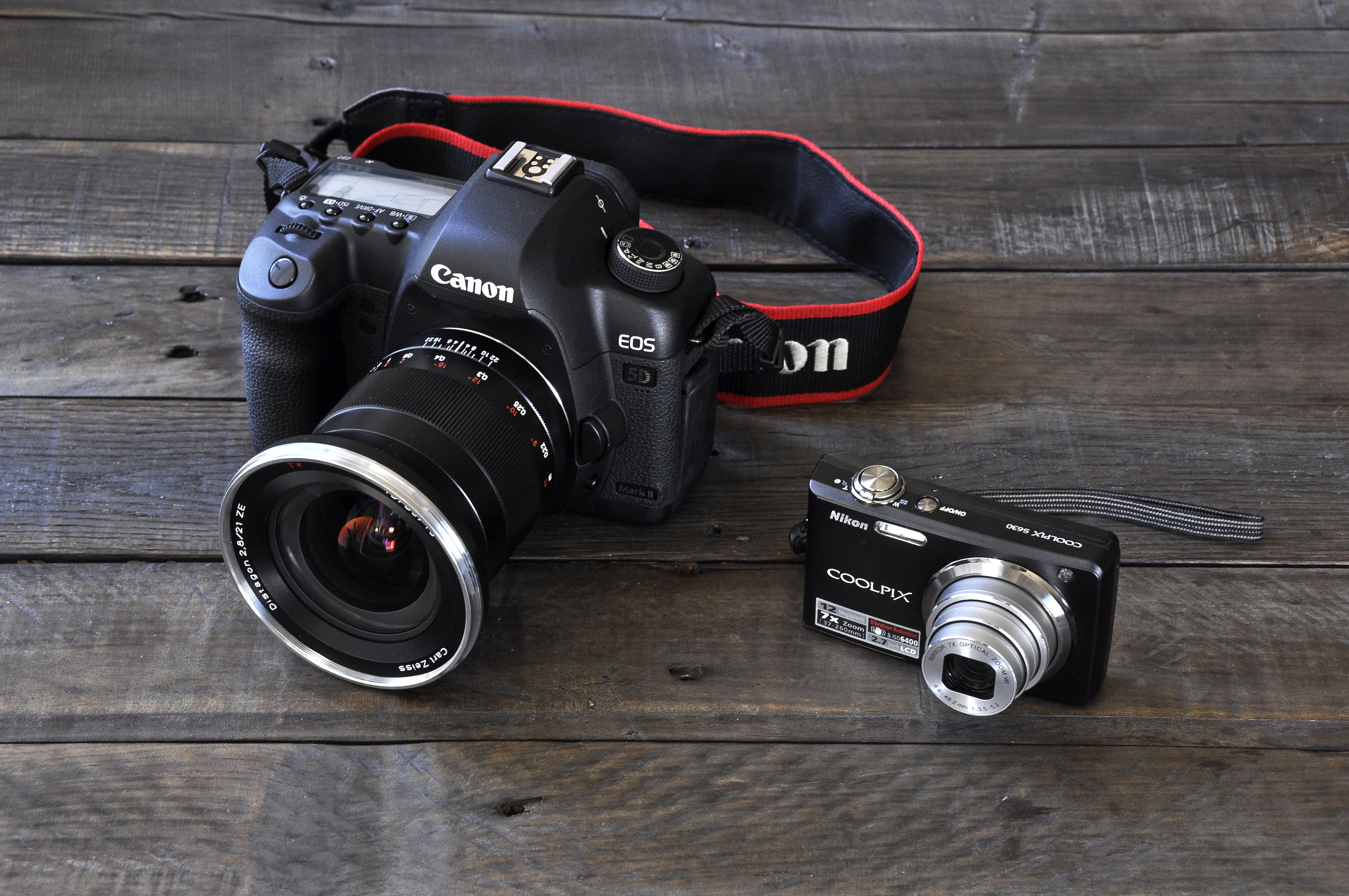
The downsides of digital SLRs come with a higher price tag and increased size and weight. These cameras are bulkier than mirrorless cameras and many times larger than point-and-shoots, and you will need at least one lens and a camera bag to protect your gear. But on the whole, the image quality produced by digital SLRs is worth the extra bulk to many photography enthusiasts (consider it a form of cross-training). These photographs can be enlarged and hung on the wall for a lifetime.
Pros: Less automation (more room for creativity), professional grade image quality, great for large prints.
Cons: Less automation (more room for user error), size and weight, cost.
Things to Remember: Get to know the camera before your trip by reading the manual and going out for some test shoots. Many digital SLR’s have automated settings such as ‘landscape’ and ‘portrait’ but you will want a baseline of familiarity.
Price Range: Budget DSLR camera/lens kits start at around $400; professional set-ups can cost $2,000 and up.
Top Cameras: The 24.2-megapixel Nikon D5600 is a powerhouse mid-range DSLR, and the Nikon D3500 is an outstanding budget DSLR. We also like the Canon Rebel T7i, but that camera has a number of video-centric features that drive the price up and many landscape photographers won’t need. Finally, Pentax makes the only weather-sealed DSLRs at the budget end of the spectrum, including the Pentax KS-2.
More: See our page on the Best DSLR Cameras of 2019
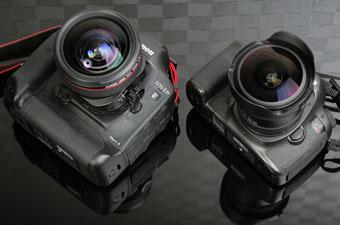
The critical distinction between entry-level and professional digital SLRs is the jump to full-frame—professional DSLRs have extra large 36x24mm sensors that take full-frame images.
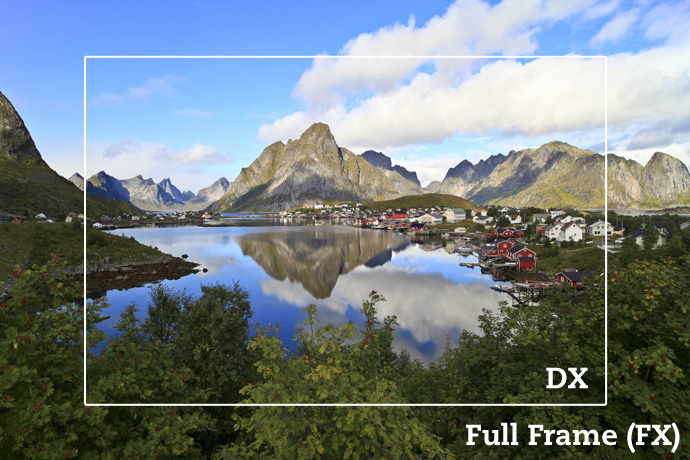
In the image to the left, the inner box represents a DX photograph and the outer box is a full-frame or FX photograph. The difference is rather astounding: full-frame images contain substantially more visual information.
Full-frame cameras are phenomenal—the best of the best—and if you can afford one it will not disappoint. There are fewer deals in the full-frame market than we would like and lenses are particularly pricey—the extra large sensors require extremely precise (and therefore expensive) glass.
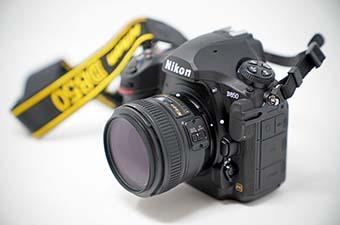
For landscape photography, one full-frame camera stands out from the pack: the Canon EOS 5DS R. With a whopping 50.6 megapixels of resolution, the 5DS R offers 20.1 more megapixels than the Canon 5D Mark IV and a 4.9 more megapixels than the Nikon D850. This camera is built for still photography with fewer video options than the competition, but we appreciate the split from the hybrid model at this end of the spectrum.
The cameras above not named the Canon EOS 5DS R certainly aren’t slouches, and you can even explore some budget full-frame options like the Canon EOS 6D Mark II and Nikon D750. Both offer impressive resolution for landscape photography and are among the best cameras out there.
Pros: Exceptional image quality (the best), high resolution prints of any size.
Cons: Cost, learning curve, size and weight.
Things to Remember: With a full-frame camera you should be prepared to invest in quality full-frame lenses (some smaller lenses are compatible but the images will be cropped).
Price Range: Camera bodies start at around $1,400 for the Canon 6D Mark II; good lenses cost nearly that much or more.
Top Models: Nikon D850 and Canon EOS 5DS R
Lenses: See our article on Lenses and Focal Lengths for Landscapes
More: See our page on the Best Full-Frame Cameras of 2020
For years, we hesitated to include smartphones in this article for a number of reasons. The images sensors were tiny, resolution was poor, the lenses didn’t have wide-angle capabilities (older iPhones couldn’t go wider than 28mm, for example), and the photos just didn’t come out very good. That said, the tides have shifted in 2020, and particularly with the release of the latest iPhone 11. The base model has two lenses including a separate ultra-wide at an impressive 13mm, along with a standard 26mm lens (the Pro adds a third tele lens at 56mm). The Google Pixel 4 is another quality smartphone for photography, although it can’t match the wide-angle capabilities of the latest iPhone.
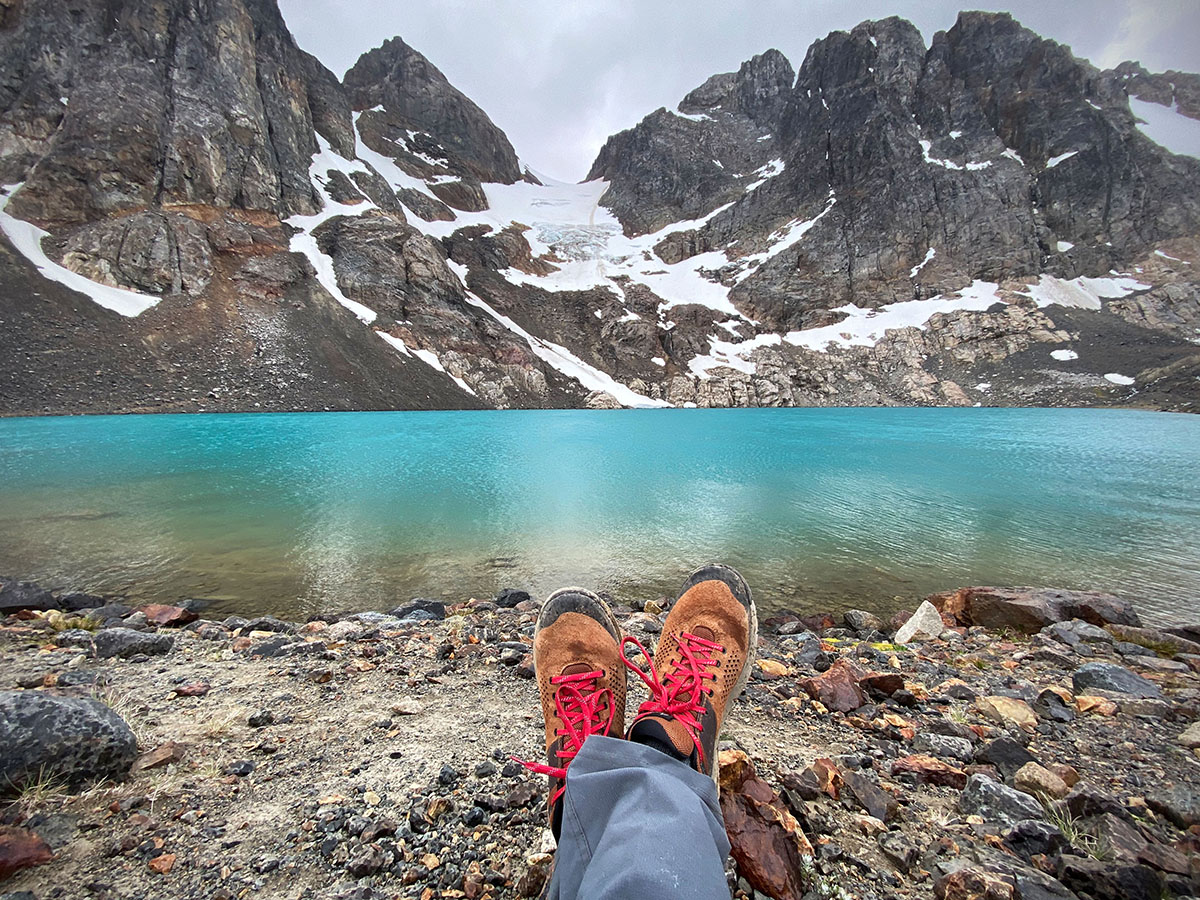
With these improvements, we now frequently use our iPhone 11 Pro in the field, even for professional and website use. How does it perform for these purposes? The convenience is unparalleled, the new triple-lens set-up is fantastic, and the photos are increasingly usable in terms of resolution and quality. That said, images do get pixelated fairly easily if you plan on cropping or enlarging them and can look very electronic, autofocus is mediocre at best, and the files are small enough that editing in Photoshop can be challenging. All in all, smartphone photos can’t match a dedicated mirrorless camera or DSLR, but we’d take the convenience of our iPhone over most point-and-shoots any day. Plus, it makes for a terrific supplementary camera.
What we like: Incredibly convenient, and the latest iPhone 11 sports a true wide-angle lens.
What we don’t: Image quality still is limited, and particularly if you crop, enlarge, or edit.
Things to Remember: If you really want to capture great images on a smartphone, shoot away. We often find that various elements of the photos are compromised, so take multiple shots and experiment with the different lenses and modes.
Price Range: The iPhone 11 currently is $699 for the base model without a trade-in, and the Google Pixel 4 is $799.
Top Smartphone Cameras: The iPhone 11 is the best overall smartphone for photography on the market in 2020, and the Google Pixel 4 isn’t far behind.
Don’t make the mistake of focusing too much on the camera itself while overlooking lenses. For landscapes, you’ll want a lens with strong wide-angle capability, which isn’t as easy as it might sound. Point-and-shoots tend to be around 24mm to 28mm at the wide end, which is serviceable but not optimal for big landscape shots (24mm is much better than 28mm). Mirrorless cameras and DSLRs are offered with kit lenses that usually are around 27mm to 29mm at the wide end. These kit lenses are decent but not professional grade and you’ll likely notice some distortion and softness, which is why we recommend adding a specific wide-angle lens for landscapes. To help clarify this topic, see our helpful guide on lenses and focal lengths for landscapes.
Landscape photographers inherently spend most of their time outdoors, and therefore weather sealing is an important consideration when making a camera purchase. This technology isn’t an exact science and manufacturers aren’t as transparent about weather sealing as we would like, but the process generally involves adding rubber around the joints and buttons to prevent moisture and dust from entering. This won’t necessarily protect your camera during an extended deluge, but it does offer piece of mind during light to moderate precipitation and exposure.
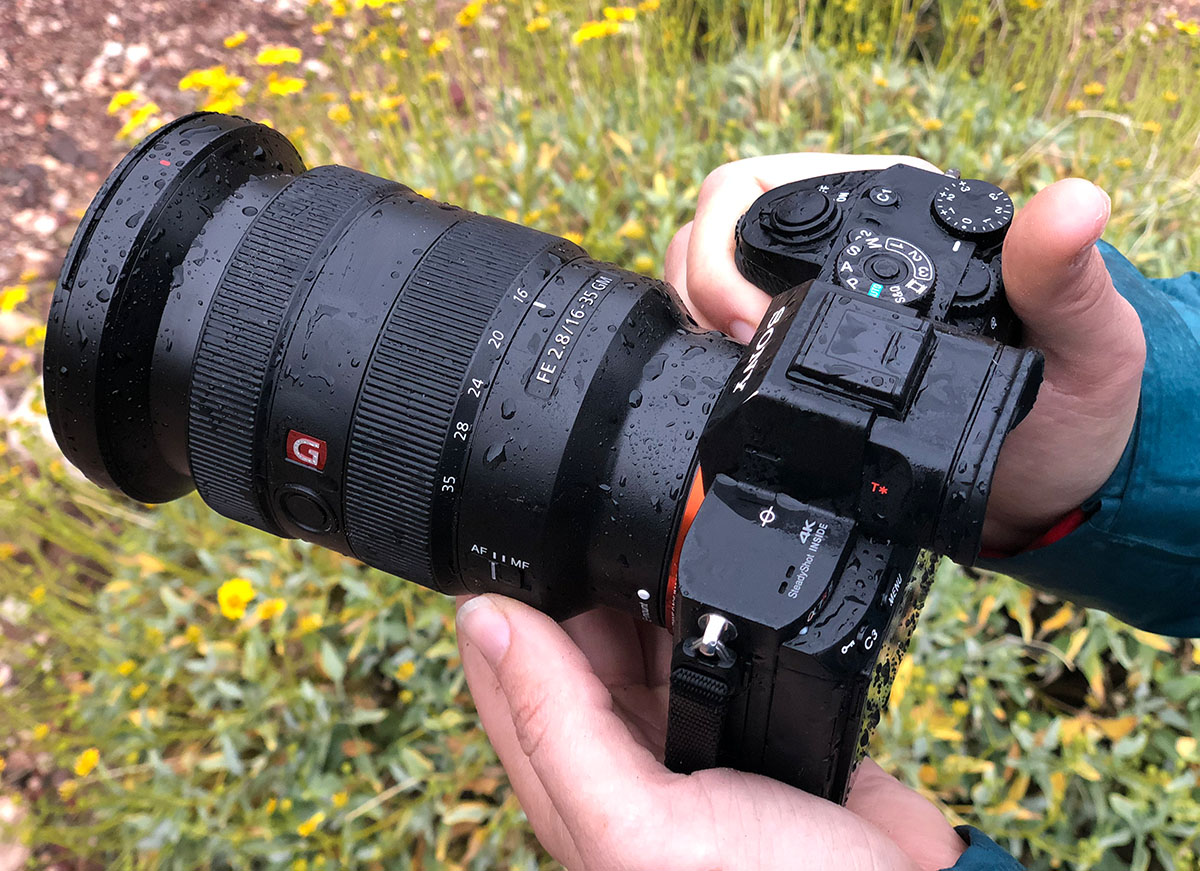
Weather sealing unfortunately increases the price of the camera and this technology is most often found on enthusiast and professional models (Pentax is one exception to this rule with entry-level DSLRs like the KS-2). With Nikon, for example, you’ll have to spend up for the D7200 to get weather sealing. For Canon, it’s the 90D but unfortunately not the Rebel series. For a complete list of current options, see our articles on weather-sealed DSLRs and weather-sealed mirrorless cameras.
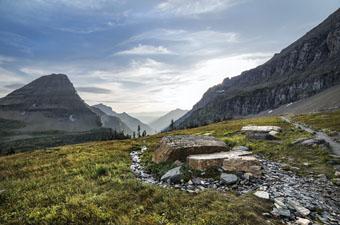
The header image for this article was shot years ago with a cheap Nikon point-and-shoot that was all this author could afford at the time (we keep it up there for sentimental reasons). It’s definitely not a perfect photo—a tripod would have helped in these early morning hours as would a higher-end camera and lens. But I was out there at sunrise in breathtaking Yellowstone National Park, with freezing hands, taking photos while others were sleeping. You can spend as much as you want on camera gear, but a common thread of great landscape photos is being in beautiful places at the right time of day. Quality cameras and lenses certainly will help your cause, but you can capture memorable landscape photos on just about any budget.